Did You Know You Can Replace Missing Teeth Without Implants? 😳
Your answer opens a sponsored ad before the guide.
Dental Clips For Missing Teeth: What They Are, How They Work And What They Cost
Missing one or more teeth doesn't always mean you need expensive dental implants or a full set of dentures. Some people can replace missing teeth using removable dental appliances that clip onto existing teeth, providing a practical way to restore their smile without surgery.
Dental Clips That Can Replace Missing Teeth Without Surgery
What Exactly Are Dental Clips For Missing Teeth?
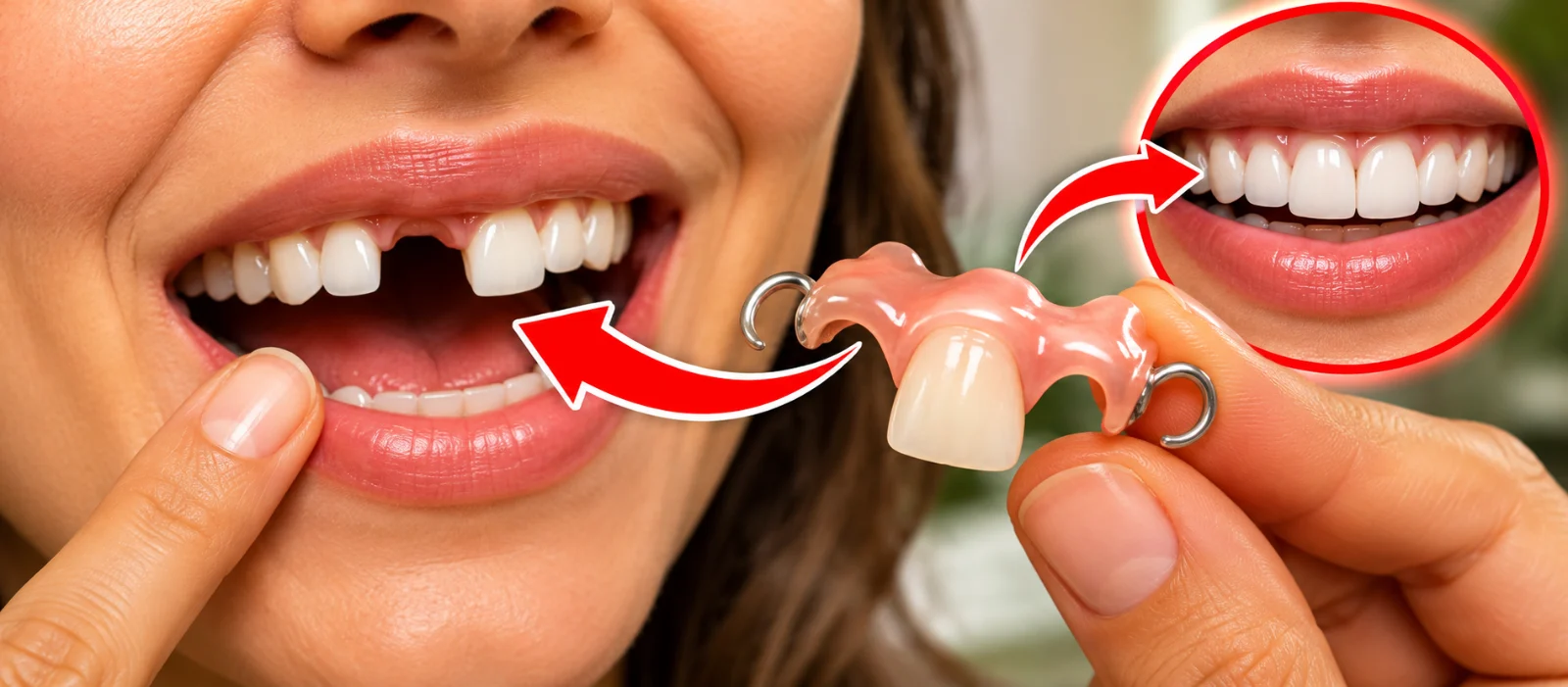
Dental clips are a popular informal name for certain removable dental appliances used to replace missing teeth.
Most commonly, the term refers to partial dentures that attach to remaining natural teeth using small clasps or other retaining components.
These appliances usually contain one or more artificial teeth attached to a supporting base.
Some designs use metal clips, while others use flexible, tooth-coloured or gum-coloured materials that are less noticeable.
Unlike dental implants, removable partial dentures do not require an artificial tooth root to be surgically placed in the jaw.
However, they still require careful fitting to ensure they are comfortable, stable and suitable for everyday use.
The Different Types Of Clip-On Replacement Teeth
Not all removable replacement teeth work in the same way.
Acrylic partial dentures generally use a plastic base and may incorporate metal clasps to help secure the appliance.
Cast-metal partial dentures use a stronger metal framework, often allowing a thinner design with carefully positioned supports and clasps.
Flexible partial dentures use materials that can blend with the gums, although they are not suitable for every mouth.
Some appliances use precision attachments rather than visible clasps, but these may require crowns or other dental work.
The best choice depends on the number of missing teeth, the condition of remaining teeth and how the appliance will be supported.
Can You Eat And Speak Normally With Dental Clips?
Many people can eat and speak comfortably with a properly fitted removable partial denture after an adjustment period.
However, replacement teeth do not always feel or function exactly like natural teeth.
At first, certain words may feel awkward, and chewing can require practice.
Dentists often recommend starting with softer foods, taking smaller bites and chewing carefully on both sides.
Hard, sticky or particularly chewy foods may be more challenging, depending on the appliance.
A well-designed partial denture should stay reasonably secure during ordinary activities, but looseness or discomfort can develop over time.
If the appliance moves excessively, causes sores or interferes with eating, it should be checked professionally.
The Cost Of Dental Clips Compared With Implants And Bridges
How Much Do Clip-On Replacement Teeth Cost?
The price of dental clips varies considerably depending on the country, dental practice, materials and number of teeth being replaced.
Simple acrylic partial dentures are often among the less expensive professionally made tooth-replacement options.
Metal-framework and more complex attachment-retained dentures generally cost more because they require additional design and laboratory work.
Flexible partial dentures can also vary substantially in price.
A quotation may include impressions or scans, fittings, laboratory manufacture and adjustments, but this should always be confirmed.
Additional treatment for remaining teeth or gums can increase the total.
Rather than comparing advertised starting prices alone, ask for a written treatment plan showing exactly what is included.
Are Dental Clips Cheaper Than Dental Implants?
Removable partial dentures generally have a lower initial cost than dental implants.
A dental implant usually involves placing a fixture into the jawbone, allowing it to heal and attaching a replacement tooth or prosthesis.
The process may require imaging, surgery, additional appointments and sometimes bone grafting.
A clip-retained partial denture avoids implant surgery and can replace several missing teeth within one appliance.
However, the lowest upfront price is not necessarily the lowest long-term cost.
Removable dentures may need adjustments, relining, repairs or replacement as the mouth changes.
Implants also require maintenance and are not suitable for everyone.
A dentist can explain the likely costs and limitations of each approach.
Can You Get Dental Clips Through The NHS Or Insurance?
In England, clinically necessary dentures may be available through NHS dental treatment when a dentist considers them appropriate.
Eligibility, NHS charges and access to treatment depend on the relevant rules and the availability of NHS dental services.
NHS treatment does not necessarily include every material or cosmetic design a patient might prefer.
Private treatment may offer additional choices, but costs vary between practices.
In Scotland, Wales and Northern Ireland, dental charging and eligibility arrangements differ.
Outside the UK, public healthcare, dental insurance and reimbursement policies vary widely.
Before agreeing to treatment, check whether the proposed appliance is covered and whether examinations, adjustments or repairs involve additional charges.
What Dentists Want You To Know Before Choosing Clip-On Teeth
Do Dental Clips Damage Your Existing Teeth?
A properly designed and maintained partial denture can be an effective treatment, but it does place demands on the remaining teeth and supporting tissues.
Clasps may contact natural teeth, and poorly fitting appliances can contribute to irritation or unwanted movement.
Plaque can also accumulate around retaining components, increasing the importance of daily cleaning.
Dentists assess whether supporting teeth are healthy enough and whether the denture will distribute forces appropriately.
Existing gum disease, untreated decay or loose teeth may need attention before treatment.
An appliance that repeatedly rubs, pinches or feels unstable should not simply be tolerated.
Professional assessment and regular reviews help reduce avoidable problems.
Can Dental Clips Replace Several Missing Teeth?
Removable partial dentures can replace a single missing tooth or several teeth in the same arch.
In some situations, they can replace teeth in different areas using one connected framework.
This flexibility is one reason partial dentures remain a common tooth-replacement option.
However, the number and position of remaining teeth affect the appliance's stability.
A denture supported mainly by the gums may behave differently from one supported by several strong natural teeth.
The dentist must also consider bite forces, gum health, available space and the shape of the jaw.
For some patients, a bridge, implant or complete denture may be more appropriate.
How Long Do Clip-On Replacement Teeth Last?
The lifespan of a removable partial denture depends on its design, materials, daily use and the condition of the mouth.
Over time, natural teeth may move, gum contours may change and the underlying jawbone may gradually remodel.
These changes can affect how securely an appliance fits.
Clasps and other components may also wear or become damaged.
Some dentures require relatively minor adjustments, while others eventually need replacing.
Cleaning the appliance as instructed, maintaining oral hygiene and attending regular dental appointments can help extend its useful life.
Avoid bending metal clasps yourself or using household glue to repair a broken appliance.
The Hidden Differences Between Cheap Clip-On Teeth And Professional Dentures
Are Online Snap-On Teeth The Same As Dental Clips?
Online advertisements sometimes use terms such as snap-on teeth, instant veneers or clip-on smiles.
These products are not necessarily the same as professionally fitted partial dentures.
Some are cosmetic covers designed to sit over existing teeth rather than replace missing teeth with a functional dental appliance.
Others are marketed as temporary solutions.
A product that looks convincing in photographs may not provide adequate chewing function, retention or oral hygiene access.
Poorly fitting devices can cause irritation or trap food and plaque.
Before purchasing an online appliance, check exactly what it is designed to do.
A cosmetic cover should not be assumed to be a clinically suitable replacement for missing teeth.
Why A Proper Dental Fitting Makes Such A Difference
A professionally made partial denture is designed around the individual's mouth.
The process may involve an examination, impressions or digital scans, bite measurements, trial fittings and final adjustments.
The dentist considers how the appliance contacts natural teeth and gums, how it responds to chewing forces and whether it can be cleaned effectively.
Even small design differences can affect comfort and stability.
An appliance that feels secure while smiling may still move when eating.
This is why fit and function matter as much as appearance.
A dental examination also allows underlying problems, such as gum disease or decay, to be identified before the appliance is made.
Which Tooth Replacement Option Is Actually Best?
There is no single tooth-replacement option that suits everyone.
Removable partial dentures may appeal to people who want to avoid surgery, replace multiple teeth or manage initial treatment costs.
Dental bridges can provide a fixed alternative in suitable circumstances, although some designs require preparation of neighbouring teeth.
Dental implants may offer a fixed solution without relying on adjacent teeth, but they involve surgery, higher initial costs and specific health requirements.
In certain situations, leaving a space may also be discussed, depending on its position and functional impact.
The best decision should balance appearance, chewing ability, comfort, maintenance, oral health and affordability.
How To Get Dental Clips For Missing Teeth
If you're considering dental clips, start with a dental examination rather than ordering a one-size-fits-all appliance online.
Ask the dentist which replacement options are suitable for your mouth and whether your remaining teeth can support a partial denture.
Request a written estimate covering the appliance, fitting appointments, follow-up adjustments and likely maintenance.
You should also ask whether the denture will be removable, which materials it uses and how to clean it safely.
The key thing to remember: Dental clips can be a useful and relatively affordable way to replace missing teeth, but the fit, design and condition of your remaining teeth matter far more than the advertised price.
For further guidance, consult the NHS information on dentures, the Oral Health Foundation's patient resources and the American College of Prosthodontists' guidance on missing teeth and replacement options.
Your selection opens a sponsored ad before the guide.