When Do You Want Your Free Hearing Aids?
Your answer opens a sponsored ad before the guide.
Everything You Need To Know About Applying For Free Hearing Aids
Imagine being able to hear conversations clearly again, enjoy television without constantly increasing the volume, and follow what friends and family are saying without asking them to repeat themselves. For millions of people experiencing hearing loss, hearing aids can make everyday life easier.
Can You Really Get Free Hearing Aids?
Yes, some people can receive hearing aids without paying for the devices themselves. Depending on the country, free hearing aids may be available through public healthcare systems, government programmes, charitable organisations or other assistance arrangements. However, eligibility and the type of equipment provided can vary significantly.
It's important to distinguish between completely free hearing aids, partially funded devices and insurance-covered equipment. Some programmes cover the full cost of assessment, fitting and follow-up care, while others contribute towards the purchase price. Private insurance may also involve deductibles or copayments. There isn't one worldwide application that guarantees free hearing aids to everyone who needs them.
Who Might Qualify For Free Hearing Aids?
Eligibility often depends on where someone lives, the extent of their hearing loss and the rules of the programme providing assistance. Some public healthcare systems offer hearing aids following a clinical assessment, while others restrict funding according to age, disability status, income or insurance coverage.
Children, older adults, veterans and people with qualifying disabilities may have access to specific programmes. However, belonging to one of these groups doesn't automatically guarantee free equipment. Applicants should investigate the requirements in their country and obtain a professional hearing assessment where necessary.
The Little-Known Hearing Aid Funding Options Worth Checking
Many people assume that purchasing hearing aids privately is their only option. In reality, public healthcare services, disability programmes, charities and community organisations may offer alternative routes to assistance. Some provide hearing aids directly, while others offer grants or refurbished equipment.
The availability of support varies considerably between regions. Certain programmes operate nationally, while others serve specific communities or groups. Funding may also be limited or subject to waiting lists. Before paying for private hearing aids, it's worth investigating recognised healthcare services and established hearing-loss organisations in your area.
How To Apply For Free Hearing Aids In The UK
In the UK, eligible patients can receive hearing aids through the NHS following an appropriate hearing assessment. NHS hearing aids are provided free of charge, and the service generally includes fitting, follow-up care and necessary maintenance arrangements.
The usual starting point is contacting a GP or following the local NHS pathway for hearing assessment. In some areas, adults can access NHS audiology services through direct referral arrangements. Availability and referral procedures differ between services. NHS hearing aids may not include every feature offered by private retailers, but they can provide effective support for many types of hearing loss.
What Happens During An NHS Hearing Aid Assessment?
An NHS hearing assessment usually involves discussing hearing difficulties, examining the ears where appropriate and completing tests to measure hearing sensitivity. An audiologist may ask about situations where hearing problems are most noticeable, such as conversations, television or background noise.
If hearing aids are recommended, the audiologist can explain suitable options and arrange fitting. The assessment may also identify problems requiring additional medical investigation. Not everyone who attends an appointment will need hearing aids, and the recommended treatment depends on the results. Following the appropriate assessment pathway helps ensure that any devices supplied are suitable.
Are NHS Hearing Aids Really Completely Free?
NHS hearing aids are supplied free to eligible patients, including the initial fitting and standard support provided through the service. Repairs and replacement batteries are generally available without charge under NHS arrangements, although local procedures and replacement policies can vary.
There may be charges or restrictions in certain circumstances, such as replacing equipment that has been lost or damaged through misuse. Patients should check their local service's rules. NHS hearing aids are normally loaned rather than sold to the patient, so they remain NHS property and should be returned when no longer needed.
Can Pensioners Get Free Hearing Aids?
In the UK, older adults can receive NHS hearing aids when clinically appropriate. There isn't a separate universal age threshold that automatically entitles someone to a device, because NHS provision is based on assessed hearing needs rather than simply reaching retirement age.
In other countries, assistance for older adults may depend on insurance, public healthcare coverage or financial eligibility. Some charitable organisations also prioritise people on limited incomes. Pensioners should investigate the hearing services available locally before assuming that expensive private hearing aids are their only option.
Can You Get Free Hearing Aids Through Medicare?
In the United States, Original Medicare generally doesn't cover routine hearing aids or hearing aid fittings. This can surprise people who assume that Medicare automatically pays for hearing devices.
However, certain Medicare Advantage plans may offer hearing aid benefits, subject to the plan's terms, provider networks and cost-sharing requirements. Original Medicare may cover certain diagnostic hearing examinations when medically appropriate, but this is different from paying for hearing aids. Beneficiaries should check their specific coverage before booking appointments or purchasing equipment.
Could Medicaid Pay For Your Hearing Aids?
Medicaid may cover hearing aids for eligible people in the United States, but coverage varies by state and age group. Hearing services for eligible children are supported through Medicaid's Early and Periodic Screening, Diagnostic, and Treatment requirements, while adult hearing aid benefits differ between states.
Some state programmes provide hearing aid coverage for qualifying adults, potentially subject to medical necessity, prior authorisation or supplier requirements. Other states have more limited benefits. Applicants should contact their state Medicaid agency or managed care provider to understand the current rules and whether any out-of-pocket costs apply.
Free Hearing Aids For Veterans
Eligible veterans in the United States may receive hearing aids through the Department of Veterans Affairs when clinically appropriate. The VA provides audiology services and may supply hearing devices as part of authorised healthcare.
Eligibility depends on the individual's circumstances and VA healthcare arrangements. Military service alone doesn't automatically guarantee that every veteran qualifies for free hearing aids. Veterans experiencing hearing difficulties should contact their VA healthcare team or audiology service to arrange an assessment and discuss available benefits.
Can Children Receive Free Hearing Aids?
Children with hearing loss may qualify for publicly funded hearing aids through healthcare or disability programmes, depending on their country. Early assessment is especially important because hearing difficulties can affect speech, language development and learning.
In the UK, eligible children can receive hearing support through NHS audiology services. In the United States, Medicaid and other state-specific programmes may provide coverage. Schools and early intervention services can also help families identify support pathways. Parents should seek professional assessment promptly when hearing loss is suspected rather than waiting to see whether the difficulty resolves.
Hearing Aid Assistance In Australia
In Australia, eligible people may receive subsidised hearing services and devices through the Australian Government Hearing Services Program. Eligibility depends on factors such as age, pension or concession status and other programme requirements.
Some participants may receive fully subsidised hearing devices, while others choose upgraded equipment requiring an additional payment. The National Disability Insurance Scheme may also support hearing-related needs for eligible participants under its own rules. Applicants should check the current requirements through Hearing Australia, the Hearing Services Program or the relevant government service.
Can You Get Free Hearing Aids In Canada?
In Canada, hearing aid assistance varies between provinces and territories. Some public programmes provide financial contributions towards hearing aids, while others offer support for particular age groups or qualifying medical circumstances.
For example, Ontario's Assistive Devices Program may contribute towards eligible hearing aids, but this doesn't necessarily cover the full purchase price. Other provinces have different funding arrangements. Private insurance and charitable assistance may also be relevant. Canadians should investigate their provincial or territorial hearing aid programmes before purchasing devices privately.
Are Free Hearing Aids Available In Other Countries?
Hearing aid funding differs substantially around the world. Some countries provide hearing devices through public healthcare, while others rely more heavily on private insurance, personal payments or charitable programmes.
Eligibility can depend on residency, age, clinical need and financial circumstances. Certain healthcare systems cover standard hearing aids but require additional payments for premium features. Others offer only limited assistance. The best starting point is the official healthcare service or recognised hearing-loss organisation in the country where the applicant lives.
Can Charities Help Pay For Hearing Aids?
Charitable organisations sometimes provide grants, donated hearing aids or assistance towards hearing-related equipment. Some focus on children, older adults, veterans or people experiencing financial hardship.
Charity funding isn't guaranteed, and eligibility requirements vary. Certain organisations provide financial contributions rather than complete devices, while others offer support only within specific geographical areas. Applicants should check whether the charity currently accepts applications and whether it funds hearing aids specifically. Established hearing-loss organisations may also help identify local assistance programmes.
The Refurbished Hearing Aids That Some People Overlook
Some assistance programmes may provide professionally refurbished hearing aids. These devices have previously been used but may be inspected, serviced and prepared for another eligible recipient.
However, hearing aids aren't one-size-fits-all products. A device must be suitable for the individual's hearing loss and professionally programmed where appropriate. Ear moulds and other components may also need replacing. Anyone considering donated equipment should confirm that it can be safely fitted and supported by a qualified hearing professional. Receiving a device without access to proper fitting may provide limited benefit.
Do You Need A Hearing Test Before Applying?
Most clinical hearing aid programmes require an assessment to determine the type and degree of hearing loss. Hearing tests help professionals identify whether amplification is appropriate and what features may be useful.
The assessment may include pure-tone audiometry, speech testing and examination of the ears. Some programmes also require medical documentation or specific referral procedures. Applicants should check whether testing must be completed through an approved provider. A hearing test is an important part of choosing suitable equipment rather than simply an administrative requirement.
What Happens During A Hearing Test?
A hearing test often begins with questions about symptoms, medical history and situations where hearing difficulties occur. The audiologist may examine the ears and use specialised equipment to measure responses to different sounds.
During pure-tone audiometry, the patient listens for tones at different frequencies and volumes. Other tests may assess speech understanding or middle-ear function. The results help determine whether hearing aids, medical treatment or further investigation is appropriate. The appointment is generally straightforward, although the precise procedures depend on the patient's age and circumstances.
What If Your Hearing Loss Is Only Mild?
Mild hearing loss can still affect everyday communication, particularly in noisy environments. Some people struggle to follow conversations in restaurants, meetings or social gatherings even when they can hear reasonably well in quiet surroundings.
Whether someone qualifies for funded hearing aids depends on the programme's clinical and eligibility requirements. Some services consider the practical impact of hearing loss alongside test results. Others have specific thresholds. A professional assessment can help determine whether hearing aids or other communication strategies would be beneficial.
Can You Get Hearing Aids For One Ear?
Some people experience hearing loss primarily in one ear. Depending on the cause and severity, a hearing professional may recommend a conventional hearing aid, a specialised routing system or another form of treatment.
Funding eligibility depends on the programme and the type of device recommended. Not every person with hearing loss in one ear will benefit from the same equipment. Sudden hearing loss in one ear requires urgent medical assessment, because certain causes need prompt treatment. Applicants should obtain appropriate clinical advice before focusing on funding options.
What About Severe Or Profound Hearing Loss?
People with severe or profound hearing loss may require more powerful hearing aids or specialist hearing services. Some may also be assessed for cochlear implants or other technologies when conventional hearing aids provide insufficient benefit.
Public healthcare and insurance programmes may have separate rules for specialist equipment. Eligibility can involve detailed hearing tests and additional assessments. A person with significant hearing loss shouldn't assume that standard over-the-counter hearing aids will meet their needs. Specialist audiology advice is important for identifying appropriate treatment and support.
Are Expensive Hearing Aids Better Than Free Ones?
Private hearing aids can include advanced features such as rechargeable batteries, Bluetooth connectivity, automatic sound adjustments and sophisticated noise-management systems. However, a higher price doesn't automatically mean a device will produce better results for every user.
The most important factors include suitability for the person's hearing loss, correct fitting, programming and ongoing support. NHS and other publicly funded hearing aids can be effective, even when they don't offer every premium feature. Anyone considering a private upgrade should compare the actual benefits rather than assuming that free equipment is necessarily inferior.
The Different Types Of Hearing Aids Available
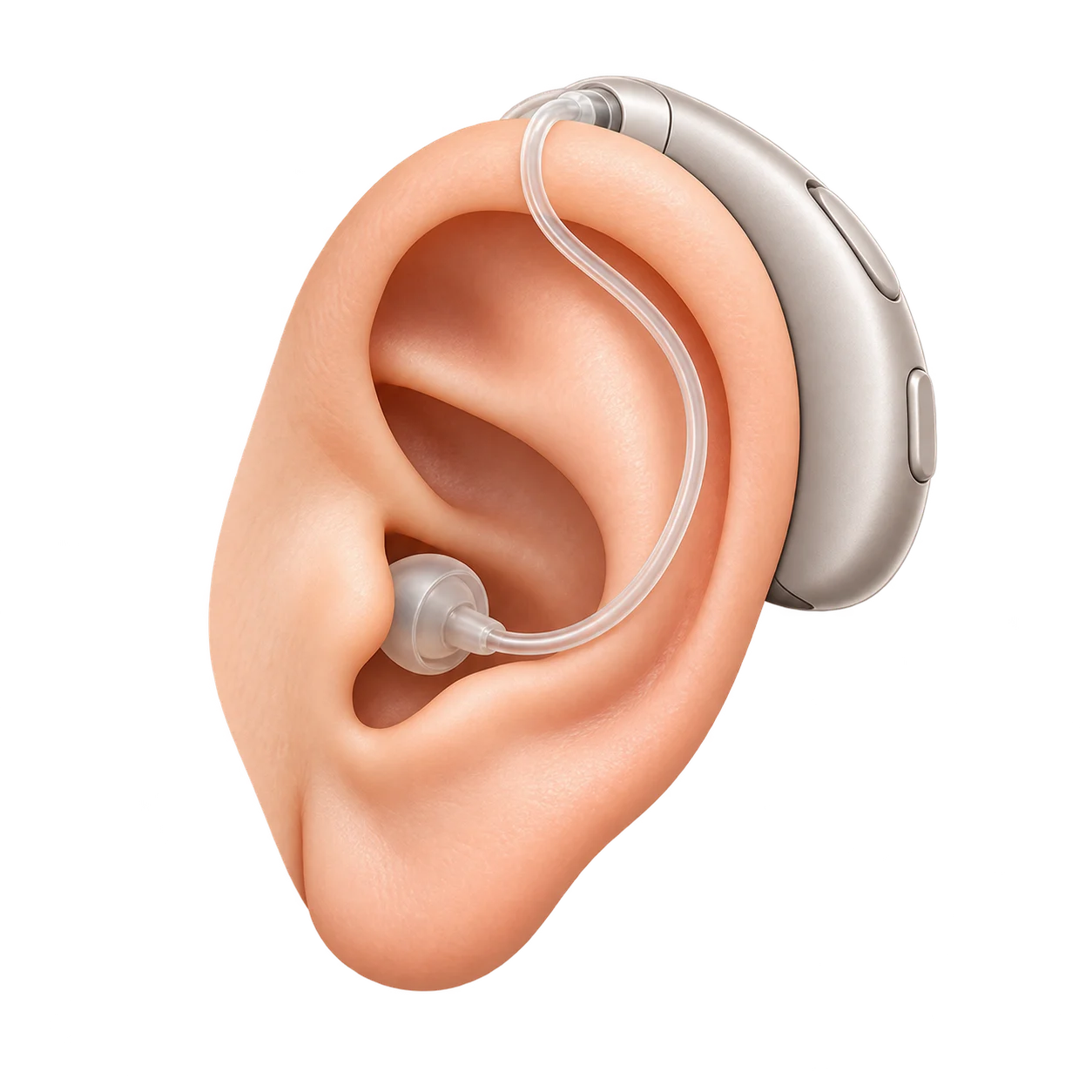
Hearing aids come in several styles, including behind-the-ear, receiver-in-canal and in-the-ear devices. Some are small and discreet, while others are designed for easier handling or more powerful amplification.
The most appropriate style depends on the type of hearing loss, ear anatomy, dexterity and personal preferences. Public funding programmes may offer a more limited range than private retailers. However, appearance shouldn't be the only consideration. Comfort, reliability, ease of use and sound quality are often more important than choosing the smallest possible device.
Can You Get Rechargeable Hearing Aids For Free?
Rechargeable hearing aids are increasingly common and can be convenient for people who prefer not to handle small disposable batteries. Some publicly funded hearing services offer rechargeable models, although availability depends on the provider and current equipment range.
Applicants shouldn't assume that every free hearing aid programme includes rechargeable devices. Some services may supply battery-powered models instead. Rechargeable hearing aids also require access to suitable charging equipment and electricity. Patients should discuss their preferences and practical needs with the audiologist before choosing a device.
What About Bluetooth Hearing Aids?
Bluetooth-enabled hearing aids can connect to compatible smartphones and other devices, allowing users to stream calls or audio directly to their hearing aids. Certain models also support remote adjustments or companion applications.
However, Bluetooth features vary between manufacturers and models. Compatibility with specific phones isn't universal, and some functions require additional accessories. Public programmes may offer connected hearing aids, but not every funded device includes these features. Applicants should check whether connectivity is essential for their needs and whether the available equipment supports their devices.
How To Start Your Free Hearing Aid Application
The first step is identifying the appropriate hearing service or funding programme in your country. Check whether it provides free hearing aids, partial financial assistance or insurance coverage.
Next, follow the required referral or assessment process. Some services allow direct appointments, while others require a healthcare professional's referral. Gather any requested identification, insurance details or eligibility documents. Once the assessment is complete, the provider can explain available equipment and the next steps. Avoid purchasing hearing aids in advance unless reimbursement is explicitly permitted.
What Documents Might You Need?
Application requirements vary, but some programmes ask for proof of identity, residency, insurance coverage, income or eligibility for particular benefits. Medical documentation and hearing test results may also be required.
Applicants should check the exact requirements before submitting an application. Providing incomplete information can delay processing, while unnecessary documents may create privacy risks. Use official application channels and keep copies of important correspondence. If a provider requests sensitive financial information, verify its legitimacy and understand why the details are needed.
How Long Does It Take To Receive Free Hearing Aids?
Waiting times vary according to the healthcare service, location and type of equipment required. Some applicants may receive an assessment relatively quickly, while others face longer waits for appointments, approval or fitting.
Custom ear moulds and specialist devices may require additional preparation. Funding decisions through charities or insurance programmes can also take time. Applicants should ask their provider for the current estimated waiting period and whether follow-up appointments are required. Websites promising guaranteed immediate approval should be treated cautiously unless the claim is supported by an identifiable programme.
What Happens At Your Hearing Aid Fitting?
During a hearing aid fitting, an audiologist or hearing professional adjusts the devices to match the user's hearing needs. The appointment may include programming, checking comfort and explaining how to insert, remove and maintain the hearing aids.
Some services use real-ear measurements or other verification methods to assess how the devices perform. Patients may also receive guidance on cleaning, battery replacement or charging. Hearing aids often require an adjustment period as users become accustomed to amplified sounds. Follow-up appointments can help improve comfort and performance.
Will You Need Follow-Up Appointments?
Follow-up care is an important part of successful hearing aid use. A hearing professional may check whether the devices are comfortable, whether speech is easier to understand and whether adjustments are necessary.
Some users need several changes before the hearing aids feel natural. Others may require new ear moulds, replacement parts or additional communication advice. Publicly funded services may include follow-up care, while private providers have different support packages. Before accepting hearing aids, ask what aftercare is available and whether future appointments involve charges.
Are Hearing Aid Batteries Free?
Battery arrangements depend on the country and funding programme. NHS hearing aid users in the UK can generally obtain replacement batteries through the service without charge, although collection and distribution arrangements vary locally.
Other programmes may require users to purchase batteries themselves. Rechargeable devices have different maintenance requirements, and charging accessories may not always be covered. Applicants should confirm the ongoing costs before accepting equipment. Understanding how batteries and repairs are supplied can help prevent unexpected expenses.
What Happens If Your Hearing Aids Break?
Hearing aids are small electronic devices that may require maintenance or repairs over time. Problems can include blocked microphones, damaged tubing, worn components or charging difficulties.
Public healthcare services often provide repair arrangements for devices they supply, subject to their policies. Private hearing aids may have warranties or service agreements with different conditions. Before accepting equipment, ask how repairs are arranged and whether replacement devices are available during servicing. It's also important to understand the policy for lost or accidentally damaged hearing aids.
Can You Get Replacement Hearing Aids For Free?
Replacement policies vary between programmes. Some public services provide new devices when existing hearing aids are no longer suitable or have reached the end of their useful life. Other arrangements may involve specific replacement intervals or clinical reassessments.
Lost or damaged devices may be treated differently from equipment that fails through normal use. Applicants should check whether replacement charges apply and whether a new hearing assessment is required. It's also worth asking about upgrades when hearing needs change. Free initial provision doesn't necessarily mean unlimited free replacements.
What If Your Application Is Rejected?
An unsuccessful application doesn't always mean that no assistance is available. Rejection may relate to eligibility rules, missing documentation, funding restrictions or the type of hearing aid requested.
Ask the provider whether it can explain the decision and whether a review or appeal process exists. Additional clinical evidence may be relevant in some circumstances. Applicants can also investigate other legitimate programmes, including charitable assistance or alternative insurance benefits. However, the rules of each programme should be checked carefully before submitting another application.
Can You Apply For More Than One Hearing Aid Grant?
Some people may be eligible to approach several charities or funding organisations for assistance. This can be useful when one provider offers only partial funding towards hearing aids.
However, some programmes prohibit duplicate funding or require applicants to disclose other financial support. Applicants should be transparent about grants already received and ask whether contributions can be combined. Accepting multiple payments for the same expense without permission can create problems. Coordinating legitimate funding sources may help reduce costs, but it must follow each organisation's rules.
How To Avoid Free Hearing Aid Scams
Online advertisements promising guaranteed free hearing aids can be misleading. Some websites use attractive offers to collect personal information or direct visitors towards expensive products. Others may imply government endorsement without identifying a genuine programme.
Be cautious of unusual application fees, requests for banking passwords or claims that everyone qualifies automatically. Verify the provider through official healthcare websites, recognised charities or established insurance organisations. Legitimate programmes should explain their eligibility criteria and application procedures. If an offer seems suspicious, investigate it before submitting personal or financial information.
Are Over-The-Counter Hearing Aids A Cheaper Alternative?
In the United States, over-the-counter hearing aids are available for adults aged 18 and over with perceived mild to moderate hearing loss. These devices can be purchased without a prescription or professional fitting, potentially offering a less expensive alternative to traditional hearing aids.
However, over-the-counter devices aren't suitable for everyone. Children and people with more severe or complex hearing difficulties should seek professional assessment. Symptoms such as sudden hearing loss, ear pain, drainage or significant dizziness also require medical attention. Over-the-counter hearing aids are generally purchased by the consumer rather than automatically provided free through public programmes.
The Important Difference Between Hearing Aids And Hearing Amplifiers
Hearing aids are regulated medical devices designed to compensate for hearing loss. Personal sound amplification products, sometimes called hearing amplifiers, are intended for people without hearing loss who want to amplify sounds in particular situations.
The two categories shouldn't be confused. A cheap amplifier advertised online may not provide the appropriate sound processing or protection needed by someone with hearing loss. Before purchasing a device, check whether it is a genuine hearing aid and whether it meets the relevant regulatory requirements. Professional advice can help avoid unsuitable products.
Can Hearing Aids Help With Tinnitus?
Some people with tinnitus also have hearing loss and may benefit from hearing aids. By improving access to environmental sounds, amplification can make tinnitus less noticeable for certain individuals.
However, hearing aids aren't a guaranteed cure for tinnitus, and the appropriate treatment depends on the underlying circumstances. Some devices offer additional sound-management features, but these aren't necessary or effective for everyone. Anyone experiencing persistent tinnitus should seek appropriate hearing assessment. Sudden hearing loss accompanied by tinnitus requires urgent medical evaluation.
Why Getting Your Hearing Checked Early Matters
Hearing loss can develop gradually, making it easy to overlook changes. People may begin increasing television volume, struggling with conversations or avoiding noisy environments without immediately recognising the cause.
A professional hearing assessment can identify the type and degree of hearing difficulty and determine whether further medical investigation is needed. Early support may improve communication and help people remain engaged in everyday activities. Hearing aids don't restore normal hearing in every situation, but properly fitted devices can provide meaningful benefits for many users.
Where To Find Legitimate Free Hearing Aid Information
The most reliable starting points are official healthcare services, government programmes and recognised hearing-loss organisations. In the UK, NHS audiology services provide information about publicly funded hearing aids, while RNID offers hearing-loss guidance and support.
In the United States, Medicare, Medicaid, the Department of Veterans Affairs and state assistance programmes may be relevant. Australian residents can investigate the Hearing Services Program and Hearing Australia, while Canadians can check provincial assistive devices programmes. The World Health Organization also provides general information about hearing care. Always confirm current eligibility and coverage directly with the relevant provider.
Is Getting Free Hearing Aids Really Possible?
For many people, receiving hearing aids without paying the full private purchase price is possible. Public healthcare services, government programmes, insurance benefits and charitable assistance can provide important support, although availability varies considerably around the world.
The most effective approach is to begin with a professional hearing assessment, identify legitimate funding options and understand exactly what each programme covers. Some people qualify for completely free devices and ongoing care, while others receive partial assistance or insurance contributions.
Hearing aids can make conversations, social activities and everyday communication easier. By exploring the support available in your country and following the correct application process, you may be able to access suitable hearing care without facing the full cost of private equipment.