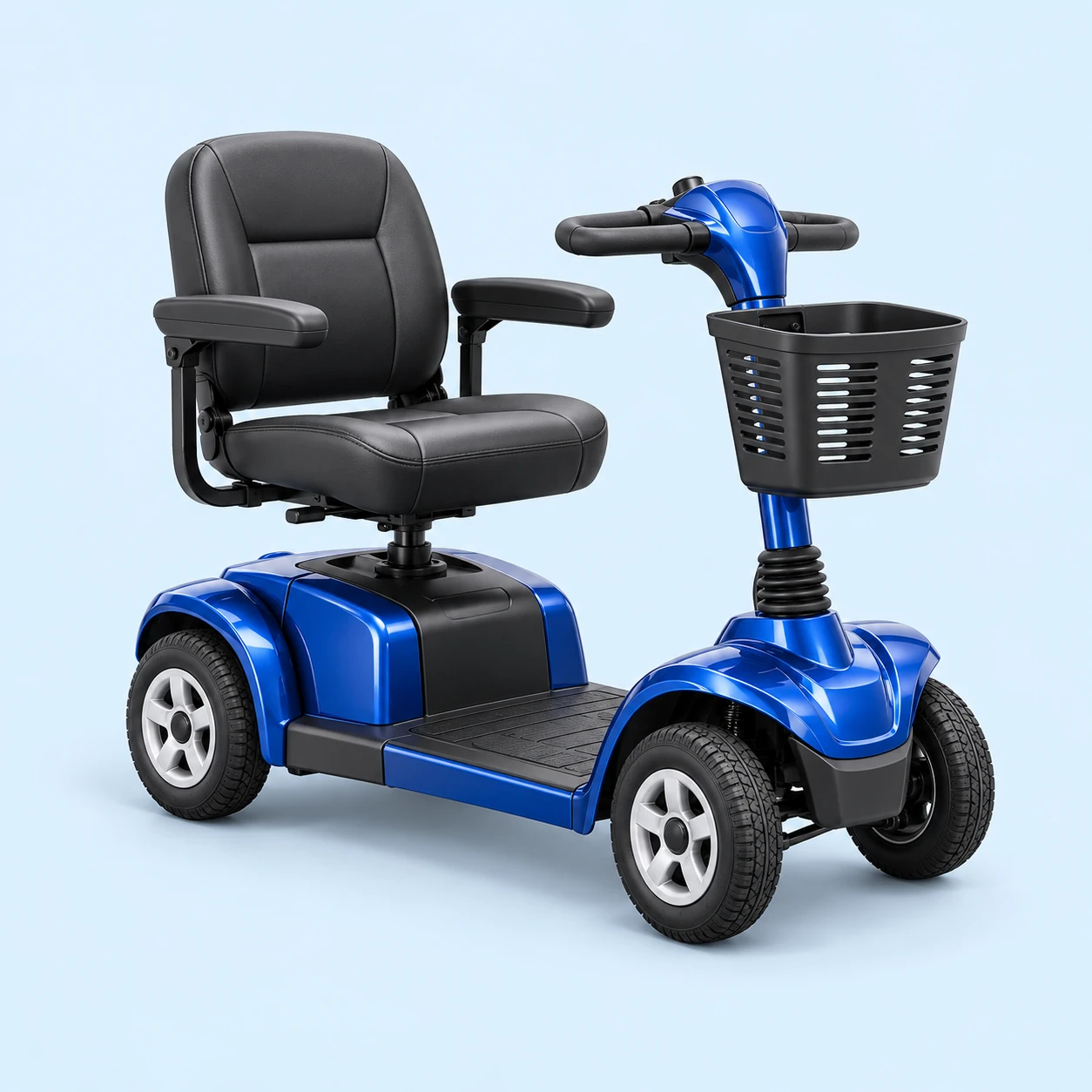
When Do You Want Your Free Mobility Scooter?
Your answer opens a sponsored ad before the guide.
How To Apply For A Free Mobility Scooter
Imagine being able to visit the shops, enjoy the outdoors and get around your local area without constantly worrying about how far you can walk. For people with limited mobility, a mobility scooter can make everyday life easier and provide greater independence. But with some models costing thousands, buying one isn't always affordable. What many people don't realise is that government programmes, disability benefits, charities, insurance providers and donated equipment schemes may help eligible individuals obtain a mobility scooter for free or at a reduced cost. From the UK and United States to Australia and other countries, several funding routes are worth exploring. Here's how to find available assistance, understand the eligibility requirements and take the first steps towards applying.
Can You Really Get A Free Mobility Scooter?
Yes, some people can obtain a mobility scooter without paying the full purchase price themselves. Assistance may be available through government-funded healthcare, disability organisations, charitable grants, insurance coverage and equipment donation programmes.
However, there is no universal scheme that guarantees everyone a free mobility scooter. Some organisations provide equipment directly, while others contribute towards the cost or offer subsidised leasing arrangements. Eligibility depends on factors such as medical necessity, income, disability status and location. Understanding the different funding routes can help applicants identify the most realistic options.
Who May Qualify For A Free Mobility Scooter?
People with significant mobility limitations may qualify for assistance through certain healthcare, insurance or disability programmes. Eligibility often depends on how a medical condition affects someone's ability to move around safely and independently.
Some schemes also consider household income, age, disability benefits or whether the scooter is medically necessary. Others focus on people who cannot afford essential mobility equipment. However, difficulty walking doesn't automatically guarantee funding. Each organisation applies its own criteria, and some programmes only cover equipment needed for mobility inside the home.
The Government Programmes Worth Checking First
Government-funded assistance can be an important starting point for people seeking mobility equipment. Depending on the country, support may be available through public healthcare, disability benefits, veterans' services or specialist assistive technology programmes.
However, government assistance doesn't always mean receiving a scooter free of charge. Some programmes provide financial contributions, equipment loans or leasing arrangements rather than outright ownership. Others primarily fund wheelchairs and may exclude mobility scooters. Applicants should check the official rules in their country before beginning an application.
How To Apply For Mobility Scooter Assistance
The application process generally begins by identifying an organisation that provides or funds mobility equipment in your area. This might be a healthcare provider, disability service, charity, insurance company or local equipment programme.
Applicants may need to explain their mobility difficulties, provide medical evidence and demonstrate that a scooter would meet their needs. Some organisations arrange professional assessments before approving equipment. Others request financial information or evidence that alternative funding has been explored. Following the provider's application process is essential because requirements vary considerably.
Can You Get A Free Mobility Scooter In The UK?
In the United Kingdom, people with mobility difficulties may be able to access support through disability benefits, charitable organisations and specialist mobility schemes. However, NHS wheelchair services do not generally provide mobility scooters as standard equipment.
One important option is the Motability Scheme, which allows eligible people to use qualifying mobility allowances towards leasing mobility equipment. Charitable grants and donated scooters may also be available in certain circumstances. Applicants should investigate the different options rather than assuming that every mobility-related service provides free scooters.
The Motability Scheme Could Help You Get A Scooter
The Motability Scheme is one of the best-known mobility support arrangements in the UK. Eligible people receiving certain qualifying mobility allowances can use their allowance towards leasing a mobility scooter or powered wheelchair.
The scheme isn't the same as receiving a free scooter outright. Payments are generally made from the qualifying mobility allowance, and the equipment is leased rather than purchased. However, packages can include servicing, maintenance, insurance and other benefits under the applicable terms. Eligibility and product availability should be checked directly through Motability.
Who Qualifies For A Motability Scooter?
Eligibility for the Motability Scheme depends on receiving a qualifying mobility allowance with sufficient time remaining on the award. This can include the enhanced rate mobility component of Personal Independence Payment or certain other qualifying benefits.
Receiving a disability benefit doesn't automatically mean someone qualifies. The type and rate of allowance matter, and not all benefits can be used for the scheme. Applicants should check their current award letter and Motability's official eligibility guidance before approaching a dealer.
How To Apply For A Motability Mobility Scooter
Eligible applicants can begin by checking the scooters available through the Motability Scheme. The next step is usually to contact an accredited dealer who can explain suitable models and arrange an assessment or demonstration.
The dealer can help applicants understand the leasing process, payment arrangements and equipment features. It's important to choose a scooter that matches the user's mobility needs, storage arrangements and intended journeys. Before signing an agreement, applicants should review the current lease conditions and any additional payments or charges.
Can You Get A Scooter Without Receiving PIP?
Yes, receiving Personal Independence Payment isn't the only possible route to mobility scooter assistance. Some people qualify for Motability through other eligible mobility allowances, while others may receive help from charities or local organisations.
However, people who don't receive a qualifying mobility benefit generally cannot access Motability simply because they have difficulty walking. They may still be able to apply for charitable funding, donated equipment or other assistance. Exploring multiple sources can be especially important when disability benefit eligibility isn't established.
Can Pensioners Get A Free Mobility Scooter?
Older adults with mobility difficulties may qualify for assistance through charities, community equipment organisations or certain healthcare and insurance programmes. However, being a pensioner doesn't automatically entitle someone to a free scooter.
In the UK, Attendance Allowance does not include a mobility component and cannot be used to join the Motability Scheme. Some older people already receiving qualifying mobility benefits may remain eligible under the relevant rules. Others may need to investigate charitable grants, refurbished equipment or local support programmes.
What About Mobility Scooters Through The NHS?
The NHS provides wheelchair services for eligible patients, but these services generally focus on wheelchairs and specialist mobility equipment rather than conventional outdoor mobility scooters.
Eligibility and equipment provision depend on local clinical criteria. People with significant mobility difficulties may benefit from an NHS wheelchair assessment even if a scooter isn't available. A healthcare professional can help identify suitable equipment and discuss whether other services or organisations may provide assistance.
The Charities That May Help Pay For A Mobility Scooter
Charitable organisations can sometimes provide grants towards mobility equipment for people who meet their eligibility requirements. Some focus on particular disabilities, medical conditions, age groups or financial circumstances.
However, not every charity funds mobility scooters, and available grants may change according to budgets and demand. Applicants should check whether the organisation accepts individual applications and whether a professional referral is required. Some charities may prefer to fund essential equipment directly through approved suppliers.
Turn2us Could Help You Find Financial Support
Turn2us is a UK charity that provides information about welfare benefits and charitable grants. Its grants search resources can help people investigate funding opportunities relevant to their circumstances.
Turn2us doesn't guarantee mobility scooter funding, and not every listed organisation will support equipment purchases. However, its resources can help applicants identify charities that might otherwise be difficult to find. Searching using relevant personal circumstances and carefully checking each funder's criteria can make the process more effective.
Local Disability Charities May Offer Hidden Opportunities
Smaller local charities sometimes provide practical assistance that isn't widely advertised. Depending on their purpose and available funding, they may help with mobility equipment, independent living or disability-related expenses.
Local disability advice centres, community organisations and social services teams may know about relevant funding opportunities. Some organisations also operate equipment reuse or donation schemes. Availability varies considerably, so applicants should contact services in their area and ask specifically about mobility scooter grants or donated equipment.
Can You Get A Mobility Scooter Through Social Services?
Local authority adult social care services may assess people who have difficulties managing everyday activities because of disability, illness or age. An assessment can identify support needs and suitable equipment.
However, councils don't generally guarantee mobility scooters as part of social care provision. They may recommend other mobility aids, adaptations or support arrangements. Depending on local services, staff may also be able to signpost applicants towards charities or equipment schemes. An assessment can still be useful even when a scooter isn't directly funded.
The Disabled Facilities Grant Explained
In England, Disabled Facilities Grants can help eligible people pay for certain home adaptations that support independent living. Similar arrangements operate under different rules in other parts of the UK.
However, these grants are intended for qualifying adaptations rather than the routine purchase of mobility scooters. They may support improvements such as ramps or access arrangements where eligibility requirements are met. Someone who already uses a scooter may benefit from discussing suitable home adaptations with their local authority.
Can Veterans Receive Mobility Scooter Assistance?
Military veterans with disabilities may be eligible for support through veterans' organisations, healthcare services or specialist charitable funds. The available assistance depends on the country, service history and individual circumstances.
In the UK, organisations such as the Royal British Legion and SSAFA may be useful starting points for information about support. However, applicants should not assume that these charities routinely provide free scooters. Funding decisions are based on the organisation's criteria and available resources.
How To Get A Free Mobility Scooter In The United States
In the United States, some people may qualify for mobility scooters through Medicare, Medicaid, veterans' healthcare or other insurance arrangements. However, eligibility is usually linked to medical necessity rather than simply wanting help with outdoor travel.
Insurance programmes often assess whether a powered mobility device is required for essential activities inside the home. This distinction is important because a person who only needs a scooter for shopping or recreational outings may not meet the relevant coverage rules. Applicants should investigate their specific insurance benefits before purchasing equipment.
Medicare Part B May Cover Mobility Scooters
Medicare Part B can cover certain power-operated vehicles, including qualifying mobility scooters, when medical necessity and other programme requirements are satisfied.
Coverage generally depends on whether the device is needed to help the beneficiary perform activities of daily living within the home. A healthcare professional must assess the person's needs, and supplier requirements also apply. Medicare coverage does not automatically mean the scooter is completely free, because deductibles and coinsurance may remain payable.
Who Qualifies For A Medicare Mobility Scooter?
Medicare coverage generally requires evidence that a person has a mobility limitation affecting their ability to perform necessary activities inside the home. The assessment considers whether other mobility aids, such as a cane, walker or manual wheelchair, can adequately meet their needs.
The person must also be able to use the scooter safely, including operating its controls and transferring onto and off the device, or otherwise meet the relevant coverage requirements. The home environment and supplier documentation may also be considered. A doctor or other authorised healthcare professional can explain the assessment process.
How To Apply For A Mobility Scooter Through Medicare
The first step is to discuss mobility difficulties with a healthcare professional. If a powered mobility device appears medically necessary, the provider can arrange the appropriate assessment and documentation.
Applicants should then work with a Medicare-enrolled equipment supplier that meets the programme's requirements. Certain equipment may require prior authorisation or additional documentation. Patients should confirm their coverage, expected out-of-pocket costs and supplier participation before accepting equipment. Purchasing a scooter independently doesn't guarantee reimbursement.
Can Medicaid Provide A Free Mobility Scooter?
Medicaid may cover medically necessary mobility equipment for eligible beneficiaries, but coverage rules vary between states and individual programmes.
Some beneficiaries may receive substantial financial assistance, potentially leaving little or no out-of-pocket cost. However, eligibility, documentation and approved equipment differ. Applicants should contact their state Medicaid programme or managed care plan to ask about power-operated vehicles and durable medical equipment coverage.
Can Veterans Get A Scooter Through The VA?
Eligible veterans receiving healthcare through the US Department of Veterans Affairs may be assessed for mobility equipment when clinically appropriate. VA healthcare services can provide certain assistive devices based on medical need.
However, equipment provision is not automatic, and the type of device supplied depends on professional assessment and applicable programme rules. Veterans should discuss mobility difficulties with their VA healthcare team. The team can explain available options and whether a powered scooter or another mobility aid is appropriate.
Private Health Insurance Could Cover Some Costs
Some private health insurance policies provide benefits for durable medical equipment, which may include certain mobility scooters. Coverage depends on the policy, medical necessity requirements and the insurer's approval process.
Policies may include deductibles, copayments, coverage limits or restrictions on approved suppliers. Applicants should request written confirmation of the relevant benefits before ordering a scooter. An insurance policy covering wheelchairs doesn't necessarily provide identical coverage for mobility scooters.
Can You Get A Free Mobility Scooter In Australia?
In Australia, eligible people with disabilities may receive funding for assistive technology through the National Disability Insurance Scheme. This can potentially include mobility equipment when it meets the programme's requirements.
However, NDIS funding isn't automatically available to everyone with mobility difficulties. Eligibility depends on disability-related criteria and individual circumstances. Older Australians may need to investigate aged care services or other support arrangements instead. Applicants should use official government guidance to identify the appropriate programme.
How NDIS Mobility Scooter Funding Works
The NDIS can fund reasonable and necessary disability-related supports for eligible participants. Mobility scooters may be considered when they are appropriate for the person's disability-related needs and meet the applicable assistive technology rules.
Funding decisions can involve assessments, supporting evidence and consideration of alternative equipment. Participants should consult their NDIS planner, support coordinator or relevant professional before purchasing a scooter. Equipment bought without appropriate approval may not be reimbursed.
Can Older Australians Get Mobility Equipment Assistance?
Older Australians who aren't eligible for the NDIS may be able to access assistance through aged care programmes or other support services. The type of equipment available depends on assessment outcomes and programme arrangements.
However, not every aged care programme funds mobility scooters, and some support may involve contributions or other conditions. Applicants should consult My Aged Care and ask about mobility equipment, assistive technology and relevant assessment pathways. Local community organisations may also offer equipment loans or donated devices.
Mobility Scooter Funding In Canada
In Canada, mobility equipment assistance varies by province and territory. Some public programmes and insurance arrangements support eligible mobility aids, but scooters may be treated differently from wheelchairs.
Applicants should investigate provincial assistive device programmes, disability benefits and any available private insurance coverage. Medical documentation and professional assessment may be required. Charitable organisations and equipment reuse programmes can provide additional options where government funding is unavailable.
Can People In Other Countries Get Mobility Assistance?
Mobility equipment funding exists in different forms around the world. Depending on the country, support may be provided through national healthcare, social insurance, disability programmes, charities or community organisations.
However, eligibility and available equipment differ significantly. Some systems primarily fund wheelchairs, while others offer broader assistive technology support. Applicants should begin with their country's official disability or healthcare services and ask specifically whether mobility scooters are covered.
The Medical Conditions That May Support An Application
A wide range of health conditions can affect mobility, including arthritis, neurological disorders, chronic respiratory disease, heart conditions and injuries. However, a diagnosis alone doesn't necessarily establish eligibility for scooter funding.
Many programmes assess functional limitations rather than relying solely on the name of a condition. Applicants may need to demonstrate how walking difficulties affect essential daily activities and why other mobility aids are insufficient. Healthcare professionals can provide relevant evidence based on individual needs.
Do You Need A Doctor's Letter To Apply?
Some funding programmes require medical evidence confirming the applicant's mobility limitations and need for powered equipment. This may involve a doctor's letter, clinical assessment or detailed prescription.
Other organisations, particularly smaller charities or donation schemes, may use different eligibility processes. Applicants should check exactly what documentation is required before paying for private medical reports. Providing the correct evidence from the beginning can help avoid unnecessary delays.
Why A Mobility Assessment Can Be Important
A mobility assessment helps determine whether a scooter is suitable and safe for the person who intends to use it. Professionals may consider balance, posture, strength, vision, coordination and the ability to operate controls.
They may also assess the intended environment, including pavements, slopes, storage and access to the home. In some cases, a powered wheelchair or another mobility aid may be more appropriate. Choosing the correct equipment is important because an unsuitable scooter can create safety risks and may not meet the user's needs.
Can You Apply If You Can Still Walk Short Distances?
Being able to walk a short distance doesn't automatically exclude someone from every mobility scooter assistance programme. Some people experience significant pain, fatigue or breathlessness despite retaining limited walking ability.
However, funding criteria vary. Certain insurance programmes require evidence that mobility limitations affect essential activities within the home. Charitable organisations may apply different standards. Applicants should describe their actual functional difficulties accurately rather than assuming that limited walking ability either guarantees or prevents eligibility.
Can You Apply Without A Registered Disability?
Some charities and community equipment schemes may consider applications based on demonstrated mobility needs rather than requiring a particular disability benefit or formal registration.
However, government-funded programmes and insurance providers often have more specific eligibility requirements. Medical evidence may still be necessary even when formal disability registration isn't required. Applicants should investigate each programme's criteria and avoid assuming that every source of assistance uses the same definition of disability.
Does Household Income Affect Eligibility?
Some charitable grants and means-tested assistance programmes consider household income, savings and financial circumstances. Applicants may need to demonstrate that purchasing mobility equipment independently would cause financial hardship.
Other programmes focus primarily on medical necessity or receipt of qualifying disability benefits. Income requirements therefore vary considerably. Applicants should review the relevant rules and provide accurate financial information when requested. Having some savings doesn't automatically exclude someone from every funding source.
What Documents Might You Need?
Applications may require proof of identity, address, income, disability benefits and medical need. Some organisations also request a quotation from a mobility equipment supplier.
The exact documentation depends on the funding provider. Applicants should prepare the required information carefully and avoid submitting unnecessary sensitive documents. Where medical evidence is needed, it should explain the functional limitations relevant to the equipment. A complete application can reduce avoidable delays.
Can You Apply For More Than One Grant?
Applicants may be able to approach several charities or funding organisations, provided each scheme permits it. This can be useful when one grant covers only part of the cost.
However, some providers restrict overlapping funding or require disclosure of other financial assistance. Applicants should be transparent about any grants already received or pending. Combining legitimate funding sources may help cover the cost of a scooter, but it isn't guaranteed.
How Long Does A Mobility Scooter Application Take?
Processing times depend on the organisation, available funding and whether medical assessments are required. Some equipment donation schemes may respond relatively quickly, while insurance approvals or charitable grant applications can take longer.
There is no single waiting period that applies to every programme. Applicants should ask about expected timescales and whether additional information may be required. People with urgent mobility needs should also ask healthcare or social care professionals about temporary equipment or other suitable support.
What Happens If Your Application Is Rejected?
A rejected application doesn't necessarily mean that no assistance is available. The organisation may have limited funding, specific eligibility rules or insufficient supporting evidence.
Applicants can ask whether the decision can be reviewed and whether additional documentation would help. They may also investigate other charities, insurance arrangements or equipment reuse schemes. However, some decisions are final, and alternative funding isn't guaranteed. Understanding the reason for rejection can help identify more suitable options.
Can You Get A Donated Mobility Scooter?
Some charities, community organisations and individuals donate mobility scooters that are no longer needed. These devices may be redistributed to people who cannot afford to purchase equipment.
However, availability is unpredictable, and donated scooters may require servicing, replacement batteries or other repairs. Anyone accepting second-hand equipment should check its condition and suitability. A scooter that is free to obtain may still involve significant ongoing expenses.
Where To Find Refurbished Mobility Scooters
Refurbished mobility scooters may be available through specialist mobility retailers, equipment reuse organisations and charitable programmes. These can sometimes cost substantially less than new models.
However, refurbishment standards and warranties vary. Buyers should ask whether the battery, brakes, tyres and electrical systems have been inspected. The scooter should also be appropriate for the user's weight, mobility needs and intended journeys. A lower purchase price isn't necessarily good value if expensive repairs are required soon afterwards.
Can You Get A Free Scooter Through Community Donations?
Local community groups sometimes help connect people who no longer need mobility equipment with individuals seeking assistance. Donations may occasionally be advertised through community organisations or local online groups.
However, private donations rarely include professional assessments or warranties. Applicants should avoid paying suspicious delivery fees to unknown individuals and should inspect equipment before accepting it. A professional safety check is advisable, particularly when the scooter's maintenance history is unknown.
The Difference Between A Mobility Scooter And A Powered Wheelchair
Mobility scooters generally have handlebars or tiller steering and are commonly used by people who can sit upright, transfer independently and operate the controls safely. Powered wheelchairs use different control systems and may provide greater postural support.
This distinction matters because healthcare and insurance programmes may apply different coverage rules to each device. Someone who cannot safely operate a scooter may need a powered wheelchair instead. Professional assessment can help determine which equipment is most suitable.
Which Type Of Mobility Scooter Is Best?
Mobility scooters come in several categories, including compact travel models, pavement scooters and larger models designed for longer journeys. Each offers different advantages in portability, range, comfort and stability.
The most suitable choice depends on the user's mobility needs, local environment and storage arrangements. A lightweight folding scooter may be convenient for transport, while a larger model may provide greater comfort on longer journeys. Applicants receiving funded equipment may have a limited selection of approved models.
Can You Get A Folding Mobility Scooter For Free?
Folding and portable mobility scooters can be useful for people who need equipment that fits into a vehicle or takes up less storage space. Some funding organisations may consider these models when appropriate.
However, programmes don't necessarily fund a preferred design simply because it is convenient. Medical necessity, cost and suitability may influence the decision. Applicants should explain why a particular type of scooter is needed and check whether the funding provider covers portable models.
Are All-Terrain Mobility Scooters Covered?
All-terrain mobility scooters are designed for more demanding surfaces and may include larger wheels, stronger suspension and additional ground clearance. They can be useful in certain outdoor environments.
However, these models are often more expensive and may not meet the eligibility criteria of healthcare or insurance programmes focused on essential indoor mobility. Charitable funding may also have cost limits. Applicants should check whether the intended use qualifies before requesting a specialist scooter.
What Costs Might Still Need To Be Paid?
Even when a mobility scooter is provided without an upfront purchase cost, additional expenses may remain. These can include insurance, maintenance, battery replacement, storage and repairs.
Some leasing programmes include servicing and insurance, while donated or privately purchased scooters may not. Applicants should request a clear explanation of ongoing responsibilities. A scooter that is affordable initially can become difficult to maintain if future costs haven't been considered.
Do Mobility Scooters Need Insurance?
Insurance requirements vary by country and the type of scooter. In the UK, insurance is generally not legally compulsory for mobility scooters, although appropriate cover can be valuable for accidents, theft or damage.
Certain leasing arrangements may include insurance as part of the package. Elsewhere, different laws or programme conditions may apply. Users should check local requirements and consider the potential financial consequences of operating equipment without suitable protection.
Can You Use A Mobility Scooter On The Road?
Road-use rules depend on the country and the scooter's classification. In the UK, certain Class 3 mobility scooters can be used on roads subject to specific legal requirements and restrictions.
Not every mobility scooter is suitable or legally permitted for road use. Users should understand speed limits, registration requirements where applicable and restrictions on particular roads. Local regulations in other countries may differ considerably. Safe operation and appropriate equipment are essential.
What About Charging And Battery Replacement?
Most modern mobility scooters use rechargeable batteries that need regular charging and appropriate maintenance. Battery life depends on the model, usage patterns, terrain and battery condition.
Replacement batteries can represent a significant ongoing expense, particularly for older scooters. Some leasing arrangements include maintenance support, while donated equipment may not. Applicants should ask about battery condition, expected range and replacement costs before accepting a scooter.
Can You Get Help With Scooter Repairs?
Some charities, community organisations or equipment programmes may provide repair assistance, particularly when the scooter is essential for daily independence. However, repair funding isn't universally available.
Motability leasing arrangements and certain insurance or warranty packages may include maintenance under their terms. People using privately owned or donated scooters should investigate local repair services and potential financial support. Regular maintenance can help prevent unexpected breakdowns.
How To Avoid Fake Free Mobility Scooter Offers
Online advertisements sometimes promise free mobility scooters without clearly explaining eligibility or the funding source. Some may be ordinary commercial promotions, while others could involve misleading claims or scams.
Be cautious of websites requesting unusual upfront payments, banking passwords or sensitive personal information before explaining the programme. Genuine funding providers should have identifiable organisations, clear eligibility rules and verifiable contact details. Applicants should confirm claims through official websites rather than relying solely on social media advertisements.
The Biggest Mistakes Applicants Should Avoid
One common mistake is assuming that every disability or healthcare programme funds mobility scooters. Some only cover powered wheelchairs, while others require evidence that the equipment is necessary inside the home.
Another mistake is purchasing a scooter before obtaining approval from an insurer or funding organisation. This can create reimbursement problems. Applicants should also avoid incomplete documentation and unrealistic assumptions about waiting times. Understanding the rules before spending money can prevent disappointment.
Where To Find Official Mobility Scooter Assistance Information
In the UK, useful starting points include Motability, the NHS, GOV.UK, Turn2us and local authority adult social care services. These organisations provide information about benefits, equipment services and potential funding routes.
In the United States, Medicare.gov, Medicaid.gov and the Department of Veterans Affairs provide official information about relevant coverage. In Australia, the NDIS and My Aged Care offer guidance about assistive technology and eligibility. Applicants in other countries should consult their national healthcare and disability services.
The Best Way To Improve Your Chances Of Receiving Assistance
A strong application begins with identifying the correct funding source. Applicants should understand whether the organisation supports mobility scooters, what eligibility rules apply and which documents are required.
Clear medical evidence can be particularly important where funding depends on necessity. Applicants should explain how mobility limitations affect daily life and why the proposed equipment is appropriate. When charitable support is involved, accurate financial information may also be necessary. Careful preparation can help avoid delays, although approval is never guaranteed.
Is A Free Mobility Scooter Really Possible?
For some eligible people, obtaining a mobility scooter without paying the full purchase price is a realistic possibility. Government programmes, insurance coverage, disability benefits, charitable grants and donated equipment can all provide potential routes to assistance.
However, the available support differs greatly between countries and individuals. Some programmes cover most or all of the cost, while others provide partial funding, leasing arrangements or refurbished equipment. The most effective approach is to investigate the options that genuinely match your circumstances.
How To Take The First Step Towards A Free Mobility Scooter
If limited mobility is making everyday activities difficult, the first step is to speak with a healthcare professional or relevant disability support service. They can help assess your mobility needs and identify whether a scooter is suitable.
Next, investigate official funding programmes, insurance benefits and charities operating in your area. Check the eligibility requirements, prepare any necessary documents and confirm whether approval is required before purchasing equipment.
Although a free mobility scooter isn't guaranteed, exploring the available assistance could help reduce the financial burden of obtaining essential mobility equipment. For eligible applicants, the right funding or donation programme may provide an opportunity to regain greater independence and enjoy everyday life with more confidence.