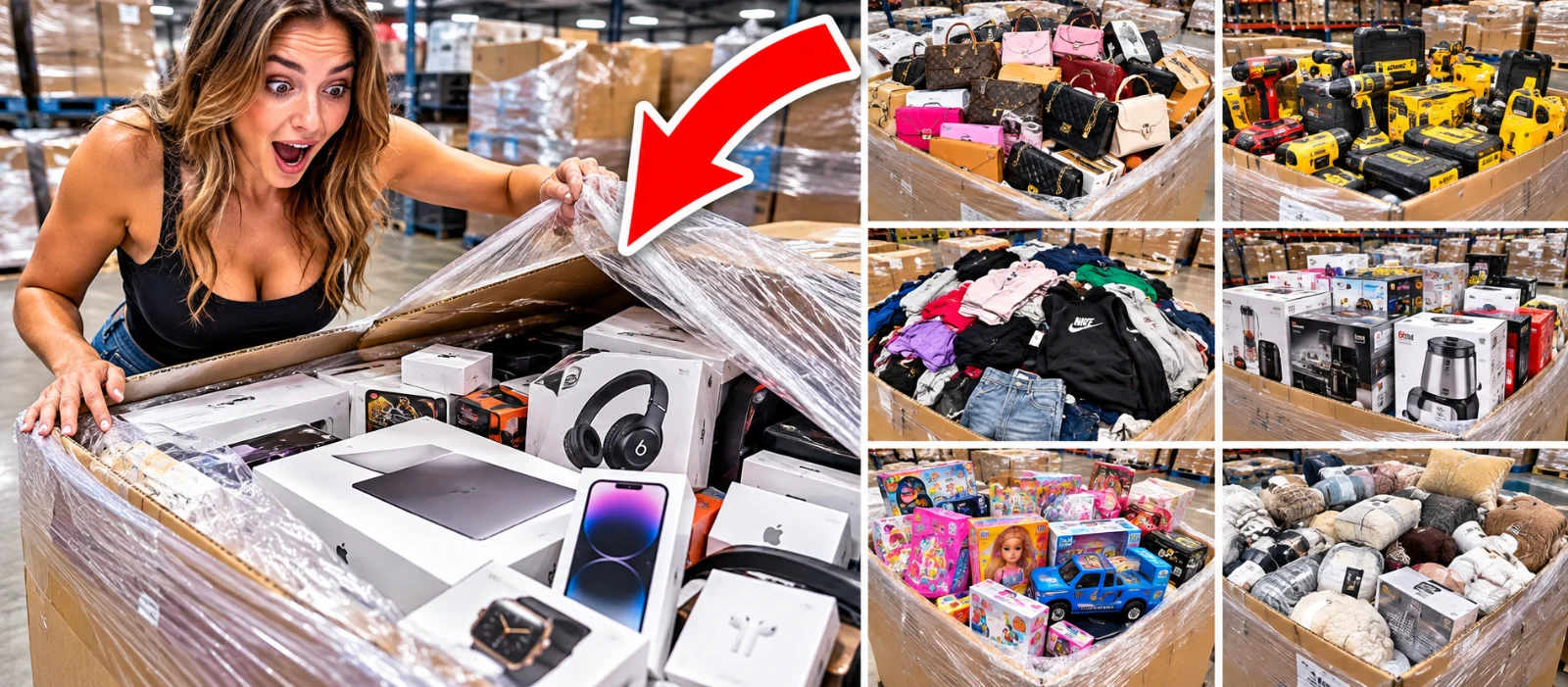
Would You Risk Buying A Mystery Pallet Full Of Returned Goods? 😳
Your answer opens a sponsored ad before the guide.
Liquidation and Returns Wholesale Pallets
Imagine buying an entire pallet of returned products without knowing exactly what you'll find inside. Some contain electronics, branded clothing, household appliances or toys.
What's Really Inside Those Mystery Return Pallets?
Electronics Pallets That Look Like A Goldmine
Electronics are among the most attention-grabbing products advertised in liquidation sales. A pallet might contain headphones, tablets, computer accessories, smart-home devices or returned gaming equipment.
The excitement comes from the possibility of discovering something valuable among dozens of boxes. But appearances can be deceiving.
A sealed retail box does not guarantee a working product. Devices may have damaged screens, missing chargers, locked accounts or faults that make resale difficult.
Before buying, check whether the pallet includes a product manifest, how the condition is described and whether testing has been performed.
The biggest mistake is calculating potential profit from full retail prices rather than realistic resale values.
Branded Clothing And Fashion Returns
Fashion pallets can contain an enormous variety of products, from jackets and trainers to handbags, dresses and accessories.
Some items may be unworn customer returns. Others could have missing labels, damaged packaging, stains or signs of use.
A pallet containing recognisable brands might appear extremely attractive, especially when the seller advertises a high original retail value.
However, clothing can be difficult to resell when sizes, styles and seasonal demand vary.
A hundred garments are not necessarily worth more than twenty desirable ones.
Buyers should also watch for counterfeit products and verify that the supplier can legitimately sell the stock.
What looks like a bargain can quickly become an expensive storage problem.
Household Goods Nobody Expected To Find
Household liquidation pallets can be particularly unpredictable.
They may contain coffee machines, vacuum cleaners, cookware, lighting, kitchen gadgets or home accessories.
Some items are straightforward to inspect and resell. Others may require electrical safety testing, repairs or replacement parts.
Large appliances can also create substantial storage and delivery costs.
One bulky product with little resale demand can take up valuable space for weeks.
This is why experienced buyers often consider the practical costs of handling stock before calculating potential profits.
The contents may be exciting, but the real value depends on condition, demand and how much work is needed to make the products saleable.
Where Do Liquidation And Returns Pallets Actually Come From?
What Happens To Products Customers Return?
When customers return products, retailers must decide what to do with them.
Some items can be inspected and placed back into normal inventory. Others may be sold as open-box goods, refurbished, recycled or transferred to liquidation channels.
Retailers may use specialist companies to process large volumes of returned or excess stock.
These businesses can combine products into cartons, lots or pallets before selling them to other businesses.
Not every return is damaged, but not every return is suitable for resale either.
The important distinction is that liquidation stock often comes with greater uncertainty than ordinary wholesale inventory.
That uncertainty is one reason buyers may be offered discounted prices.
The Difference Between Overstock And Customer Returns
Two pallets that look almost identical can represent very different buying opportunities.
Overstock generally refers to surplus inventory that a business no longer needs to hold.
Customer returns are products previously purchased and sent back by buyers.
Overstock may be unused, although storage conditions, packaging and product age still matter.
Returns can include everything from unopened goods to defective products.
Some suppliers also sell salvage stock, which may require significant repairs or be suitable only for parts.
Understanding these categories is essential because a low purchase price means little without knowing what condition the products are likely to be in.
Why Retailers Sell Entire Pallets Instead Of Individual Items
Processing returned goods individually requires labour, storage space, inspection and sometimes repairs.
For large retailers, those costs can accumulate quickly.
Selling stock in bulk can help recover some value while freeing warehouse space.
Liquidation companies then purchase or handle these goods and distribute them through wholesale channels.
Some pallets are sold with detailed manifests, while others are offered with limited information.
This is where buyers need to pay attention.
The less information a seller provides, the harder it becomes to estimate the actual value of the stock.
A pallet might look exciting in photographs, but the terms of sale are often more important than the packaging.
How To Find Wholesale Pallets Without Getting Ripped Off
Where Legitimate Buyers Look For Liquidation Stock
Businesses looking for liquidation pallets often start with established business-to-business liquidation marketplaces, wholesalers and auction platforms.
Examples of companies operating in this sector include B-Stock and Direct Liquidation, although available stock, seller relationships, countries served and purchasing requirements can change.
Some retailers also work through approved liquidation partners rather than selling directly to individual consumers.
Before registering, check the supplier's legal business identity, physical address, contact information and independent reputation.
Find out whether a business account, resale registration or tax documentation is required.
Be especially cautious of social media advertisements promising enormous pallets of expensive branded electronics for implausibly low prices.
The Warning Signs Of A Fake Pallet Seller
Liquidation scams often rely on exciting product photographs and prices that seem almost impossible to refuse.
A seller might advertise a pallet supposedly containing high-value electronics for a tiny fraction of their normal retail prices.
Other warning signs include pressure to pay immediately, unclear company information, stolen product images and requests for payment through difficult-to-recover methods.
Some fraudulent listings impersonate well-known retailers or claim to offer official warehouse clearance sales.
Before paying, verify the supplier independently rather than relying on contact details supplied in an advertisement.
Check whether the images actually represent the specific lot being sold.
And remember: an impressive-looking photograph is not proof that the pictured products will arrive.
The Questions You Should Always Ask Before Buying
Before purchasing a pallet, request as much information as possible.
Ask whether a manifest is available and whether the products have been tested.
Find out how the seller classifies item conditions and whether quantities are guaranteed.
Check the buyer's premium, shipping charges, taxes, return policy and dispute procedure.
It is also important to understand whether the products are sold as-is.
Some liquidation transactions provide limited or no opportunity to return defective goods.
If the supplier cannot clearly explain what is being sold, what the buyer will pay and what protections apply, walking away may be the sensible decision.
Can You Actually Make Money Reselling Return Pallets?
The Hidden Costs That Can Destroy Your Profit
A pallet might appear cheap until all the additional expenses are included.
Freight delivery can be substantial, particularly for heavy or oversized stock.
Some auction platforms charge buyer's premiums. Taxes, unloading, storage and packaging can add further costs.
Then there is the time needed to inspect, clean, photograph, list and dispatch individual products.
Damaged goods may require repairs or disposal.
Marketplace fees and customer returns can reduce the amount you ultimately keep.
A profitable resale business depends on the difference between total costs and actual sale proceeds, not the advertised retail value of the pallet.
Why The Advertised Retail Value Can Be Misleading
Some pallet listings include an estimated original retail value.
For example, a pallet might be described as containing products that originally sold for several thousand dollars.
That figure can sound impressive, but it does not represent guaranteed resale revenue.
Products may be outdated, damaged, incomplete or difficult to sell.
Even working items may command substantially less than their original retail price.
A realistic valuation should consider current second-hand selling prices, expected defects, selling fees and unsold inventory.
The most useful question is not "How much were these products worth when new?"
It is "How much could I realistically recover after every expense?"
The Smartest Way To Test Your First Pallet
For someone new to liquidation buying, starting with a smaller, well-documented lot can reduce uncertainty.
Choose a product category you understand and can inspect properly.
Avoid spending money you cannot afford to lose.
Calculate a maximum purchase price using conservative resale estimates rather than best-case assumptions.
Make sure you have somewhere suitable to receive, sort and store the goods.
If you plan to resell regularly, understand your local business registration, consumer protection, tax and product safety obligations.
The goal of a first purchase should be to learn how the liquidation process works without taking an unnecessarily large financial risk.
Liquidation and customer returns pallets can be fascinating because no two lots are exactly alike. Some buyers find useful stock at attractive prices, while others discover damaged products, unexpected fees or items that are difficult to resell. The best opportunities come from understanding what you're buying, verifying the supplier and calculating realistic costs before committing your money. A mystery pallet can be exciting — but doing your homework is what makes the gamble more manageable.
Your selection opens a sponsored ad before the guide.