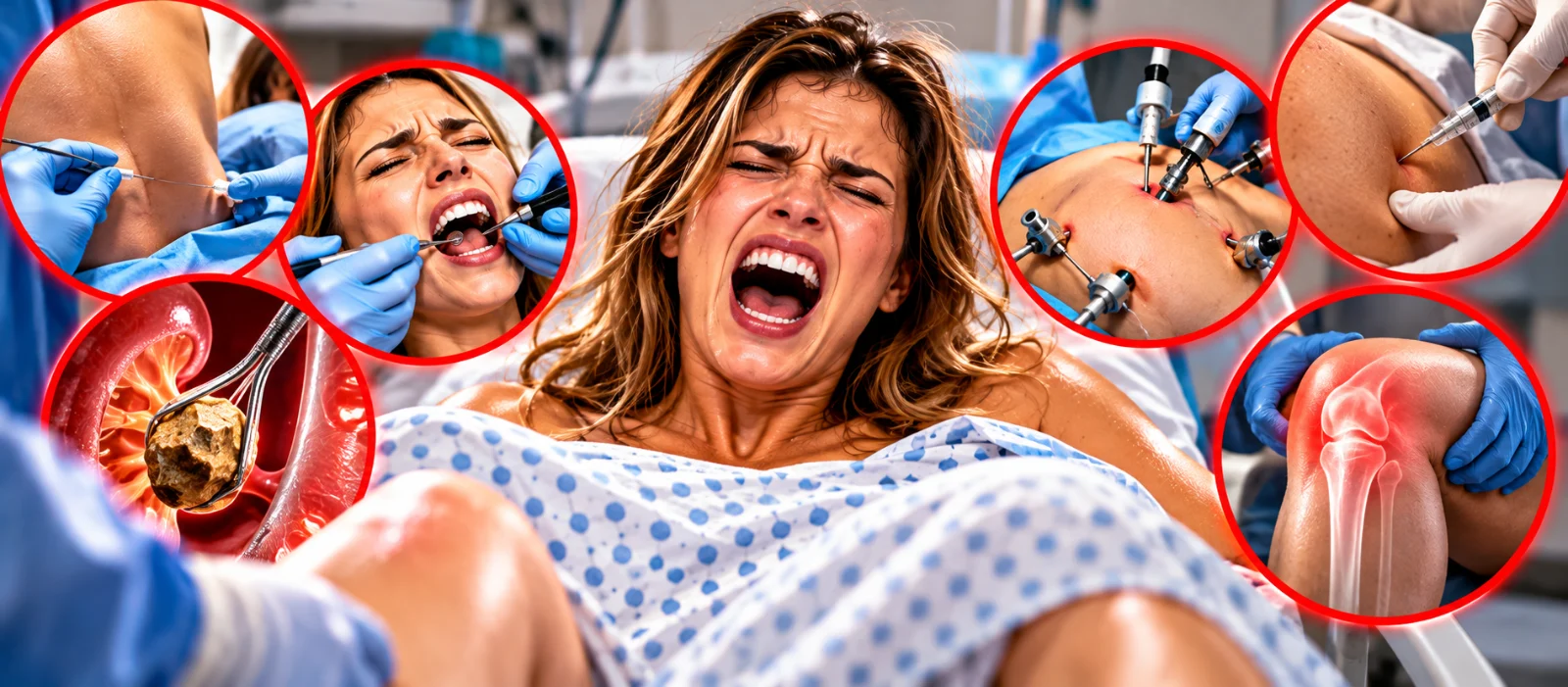
Did You Know Some Medical Procedures Can Be As Painful As Childbirth? 😳
Your answer opens a sponsored ad before the guide.
Medical Procedures That Are Considered As Painful As Childbirth
Childbirth is often described as one of the most intense physical experiences a person can endure. But some medical procedures and treatments can also cause extraordinary levels of pain, particularly when complications occur or pain relief is inadequate.
Medical Procedures That Can Cause Surprisingly Intense Pain
Bone Marrow Biopsy — The Deep Pain Patients Don't Expect
A bone marrow biopsy involves collecting a sample of marrow, usually from the back of the pelvic bone, to investigate blood disorders and certain cancers.
Local anaesthetic is used to numb the skin and surrounding tissues, but patients may still feel pressure or a brief, deep pain when marrow is aspirated.
Some people describe the sensation as a sudden pulling or aching feeling inside the bone.
Although the procedure is usually brief, anxiety and previous painful experiences can make it more difficult.
Patients can discuss additional pain relief or sedation beforehand, particularly if they have experienced significant discomfort during an earlier biopsy.
Cervical Biopsy — A Short Procedure That Can Hurt More Than Expected
A cervical biopsy involves removing a small tissue sample from the cervix, often during a colposcopy after an abnormal screening result.
Some patients experience only a brief pinch or mild cramping. Others report intense pain, particularly when multiple samples are taken.
Pain can vary considerably depending on the procedure, individual sensitivity and whether anaesthetic is used.
A cervical biopsy is different from a larger cervical excision procedure, which may involve additional anaesthesia.
Patients should be told what to expect and what pain-management options are available.
If discomfort becomes difficult to tolerate, they can ask the clinician to stop and discuss their options.
Endometrial Biopsy — The Cramping That Can Catch Patients Off Guard
An endometrial biopsy removes a small sample of tissue from the lining of the uterus.
It may be recommended when investigating abnormal uterine bleeding or certain other symptoms.
The procedure commonly causes cramping as a thin instrument passes through the cervix and collects tissue.
For some patients, the pain is brief and manageable. For others, it can be severe.
Factors such as cervical sensitivity, anxiety, previous experiences and underlying conditions can influence discomfort.
Pain relief should be discussed before the appointment, including whether local anaesthesia or other options are appropriate.
Patients should not feel pressured to continue a procedure when the pain becomes intolerable.
Procedures Involving The Kidneys, Bladder And Urinary Tract
Kidney Stone Treatment — When Relief Comes With Discomfort
Kidney stones can cause extraordinarily intense pain, particularly when a stone obstructs the ureter.
The pain of renal colic is sometimes compared with labour pain, although the experiences are not medically equivalent.
Treatment depends on the stone's size, position and associated complications.
Some stones pass naturally, while others require procedures such as ureteroscopy or shock-wave lithotripsy.
These treatments are usually performed with appropriate anaesthesia or analgesia, but patients may experience discomfort afterwards.
A temporary ureteric stent can also cause bladder irritation, urinary urgency or flank pain.
The severe pain people associate with kidney stones often comes from the stone itself rather than the procedure used to treat it.
Cystoscopy — Why Some Patients Find It Uncomfortable
A cystoscopy allows a clinician to examine the inside of the bladder using a thin camera passed through the urethra.
It may be performed to investigate blood in the urine, recurrent infections or other urinary symptoms.
Flexible cystoscopy is often carried out with local anaesthetic gel, while rigid cystoscopy may require general or spinal anaesthesia.
Patients can experience pressure, stinging or an urge to urinate during the examination.
Discomfort varies considerably, and many people tolerate flexible cystoscopy without severe pain.
Afterwards, temporary burning during urination or a small amount of blood may occur.
Patients should contact their healthcare team if they develop fever, severe pain or difficulty passing urine.
Urinary Catheter Insertion — When A Routine Procedure Becomes Painful
A urinary catheter is a flexible tube inserted into the bladder to drain urine.
Catheterisation is common in hospitals, but the experience can be uncomfortable, particularly when insertion is difficult.
Pain may occur if there is urethral irritation, narrowing, inflammation or an underlying urinary condition.
Clinicians typically use appropriate lubrication and may use local anaesthetic gel.
Forcing a catheter against resistance can cause injury, so difficult insertions require careful assessment.
Some patients also experience bladder spasms after a catheter has been inserted.
Although catheterisation is usually manageable, significant pain should not be dismissed as something patients simply have to endure.
Surgical Treatments That Can Be Particularly Painful During Recovery
Open Abdominal Surgery — Pain That Can Last Beyond The Operation
Major abdominal surgery may involve an incision through the abdominal wall to access internal organs.
The operation itself is performed under anaesthesia, so patients should not experience surgical pain while adequately anaesthetised.
However, recovery can involve substantial discomfort as tissues heal.
Simple movements such as coughing, sitting up or getting out of bed may be painful during the early postoperative period.
Pain-management plans can include medications, regional anaesthesia and other techniques depending on the operation.
Good pain control helps patients breathe deeply, move safely and participate in recovery.
Severe or worsening pain after surgery should be assessed rather than assumed to be normal.
Total Knee Replacement — The Difficult First Weeks
Total knee replacement surgery involves removing damaged joint surfaces and replacing them with artificial components.
The procedure is performed under anaesthesia, but rehabilitation can be demanding.
Swelling, stiffness and pain are common during the early recovery period.
Patients are often encouraged to begin moving the joint relatively soon after surgery, with guidance from their clinical team.
Physiotherapy is important for restoring mobility and function, but exercises can sometimes be uncomfortable.
Modern pain-management approaches may include nerve blocks, medications, ice and carefully planned rehabilitation.
Recovery experiences vary, and some patients have substantially more pain than others.
The goal is to control pain well enough to support safe movement and healing.
Haemorrhoidectomy — A Small Area With Significant Pain
A haemorrhoidectomy is an operation to remove certain enlarged or troublesome haemorrhoids.
Although the affected area may seem relatively small, recovery can be particularly uncomfortable.
The anal region contains sensitive nerves, and bowel movements can place pressure on healing tissue.
Patients may experience pain for days or weeks after surgery, depending on the procedure and individual recovery.
Clinicians may recommend pain relief, stool-softening measures, adequate fluids and other aftercare strategies.
Not all haemorrhoid treatments involve the same level of postoperative discomfort.
Less invasive approaches may be suitable for some patients, depending on the type and severity of their symptoms.
The Medical Treatments That Can Be Extremely Painful Without Proper Relief
Burn Wound Dressing Changes — Why Pain Control Matters So Much
Serious burns can damage skin and underlying tissues, sometimes requiring repeated cleaning and dressing changes.
Depending on burn depth, wound condition and treatment, these procedures can be extremely painful.
Some patients experience intense sensitivity when damaged tissue is touched or dressings are removed.
Healthcare teams may use analgesics, procedural sedation, specialised dressings and other methods to reduce suffering.
The appropriate approach depends on the patient's condition and the extent of the injury.
Modern burn care places considerable emphasis on preventing unnecessary pain during wound management.
Patients should be encouraged to report pain rather than endure it silently.
Abscess Drainage — The Pressure And Pain Of An Infection
An abscess is a collection of pus caused by infection.
Some abscesses require drainage through a small incision.
Although local anaesthetic is commonly used, numbing infected tissue can sometimes be difficult, and patients may still feel pressure or discomfort.
Larger or deeper abscesses may require more extensive anaesthesia or treatment in an operating theatre.
Pain is often caused by the abscess itself before treatment, as swelling and inflammation create pressure in surrounding tissue.
Drainage can provide significant relief once the infection is treated.
Patients should seek medical care for a suspected abscess rather than attempting to cut or drain it themselves.
Chest Tube Insertion — A Procedure That Requires Careful Pain Management
A chest tube may be inserted to remove air, blood or fluid from the space around the lungs.
It can be necessary in situations such as a collapsed lung, significant fluid accumulation or chest injury.
Insertion involves passing a tube through the chest wall, which contains sensitive tissues.
Local anaesthesia and additional pain relief are used where appropriate, although patients may still experience pressure or discomfort.
The tube can also cause pain while it remains in place, particularly during movement or coughing.
Clinicians monitor the patient's comfort and may adjust pain treatment during recovery.
The procedure can be lifesaving, and effective pain management is an important part of safe care.
Are These Procedures Really As Painful As Childbirth?
There is no scientifically reliable universal ranking that proves these 12 procedures are as painful as childbirth.
Pain is subjective and depends on many factors, including the procedure, anaesthesia, previous experiences, underlying illness and individual sensitivity.
Childbirth itself varies enormously. Some people experience intense labour pain, while others receive effective epidural or other pain relief.
Likewise, a medical procedure that causes severe discomfort for one patient may be manageable for another.
The important lesson is that patients deserve adequate pain assessment, clear explanations and access to appropriate pain relief.
Before undergoing a procedure, ask your healthcare team what discomfort to expect, which anaesthetic options are available and what to do if pain becomes difficult to tolerate.
Medical guidance from organisations such as the NHS, the American College of Obstetricians and Gynecologists, and the American Society of Anesthesiologists can help patients understand procedural pain and available treatments.
Your selection opens a sponsored ad before the guide.