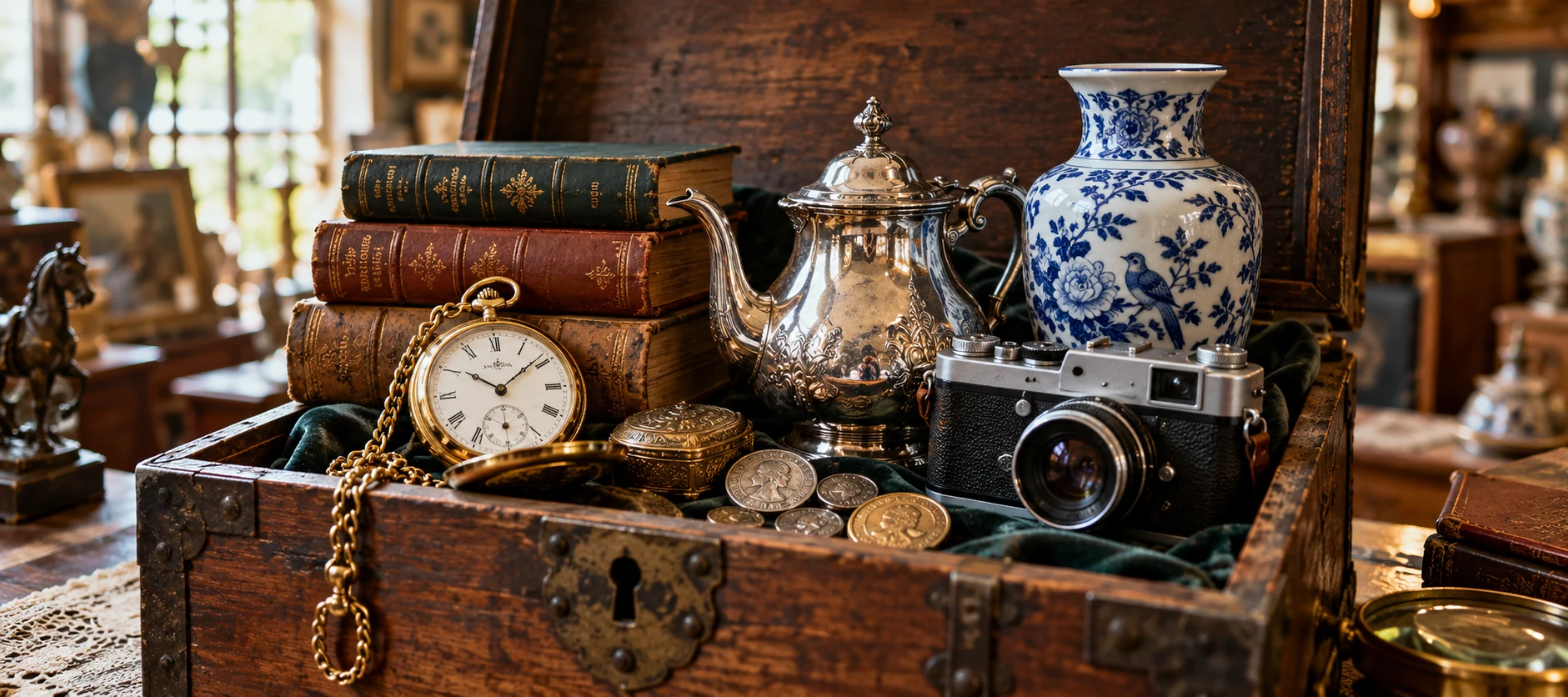
Could Something In Your Home Be Worth A Fortune? 💰
Your answer opens a sponsored ad before the guide.
Vintage Items Worth A Fortune
You could be walking past hundreds, or even thousands, without realising it. Old toys, forgotten kitchenware, dusty electronics and everyday objects from decades ago can sometimes become surprisingly valuable to collectors. The catch is that tiny details such as the maker, model, date, condition or original packaging can completely change the price. Before throwing out that box in the attic, these are four types of vintage items worth checking.
Old Toys That Could Be Worth Serious Money
That forgotten box of childhood toys might deserve another look.
Collectors can pay significant amounts for particular vintage toys, especially scarce versions that survived in excellent condition. But two toys that look almost identical can have dramatically different values.
The Toys People Wish They Had Kept
Vintage action figures, dolls, model cars, construction sets and character toys can all attract collectors.
Certain early Star Wars figures, Barbie dolls, LEGO sets, Hot Wheels cars and other recognisable toys have developed particularly strong collector followings.
Age alone, however, does not make a toy valuable.
Look underneath or on the packaging for a manufacturer, copyright date, model number or country of manufacture. Those details can help identify the exact version you own.
The Tiny Detail That Can Change Everything
Collectors can obsess over details most people would barely notice.
A different colour, packaging variation, manufacturing error, accessory or production run can sometimes separate an ordinary version from a scarce one.
Condition matters enormously too.
An unopened toy with its original box can potentially be more desirable than the same item after years of play. Even with loose toys, having the original accessories, clothing or instructions can make identification easier and may affect desirability.
Never assume two similar-looking examples are necessarily worth the same amount.
Check This Before You Give Them Away
Do not clean, repaint or repair an old toy before identifying it.
An enthusiastic restoration can potentially remove original features collectors care about.
Instead, photograph the toy, packaging and identifying marks. Search for the exact manufacturer, product name, year and model or reference number.
Most importantly, compare with examples that have actually sold rather than relying solely on ambitious asking prices.
That dusty childhood toy might be ordinary—but finding out takes only a few minutes.
Vintage Kitchen Items People Are Searching For
The cupboard at your parents' or grandparents' house might contain something more interesting than old crockery.
Certain vintage cookware, ceramics, glassware and kitchen accessories have dedicated collector markets, and some designs that once seemed completely ordinary have become highly sought after.
Check The Back Of These Before Throwing Them Out
Turn old plates, bowls, mugs and cookware over.
Maker's marks, stamps, patterns, model numbers and manufacturing information can be crucial when identifying vintage kitchenware.
Collectors may look for particular manufacturers, discontinued patterns, colours or production periods.
Pyrex is a well-known example of an everyday kitchen brand with an active collector community, but the exact pattern, age, condition and rarity matter considerably.
Do not assume every old bowl carrying a famous name is valuable.
Some Ordinary-Looking Pieces Can Be The Interesting Ones
The surprising part is that collectability is not always obvious.
A brightly patterned bowl, old cast-iron pan, discontinued mug or piece of glassware might look like something destined for a charity shop while being exactly the version somebody is trying to complete a collection with.
Sets can also matter.
Having matching lids, dishes or other original components may make an item more appealing than an incomplete example.
Check carefully for chips, cracks, staining and repairs because condition can significantly affect what collectors are willing to pay.
Don't Make This Mistake Before Checking The Value
Avoid aggressive cleaning until you know exactly what you have.
Scrubbing, polishing or using unsuitable chemicals can damage finishes, markings or decoration.
Photograph the manufacturer's marks and search for the precise pattern or model. Then look at recent completed sales for comparable examples in similar condition.
The important word is comparable.
A rare version selling for a large amount does not make every similar-looking piece valuable—but it can make checking the cupboard worthwhile.
Old Electronics You Should Never Throw Away Without Checking
That drawer filled with obsolete technology might not be as useless as it looks.
Old phones, computers, games consoles, calculators, cameras and portable music players can attract collectors because technology that was once everywhere eventually becomes difficult to find in original condition.
The Old Technology Collectors Still Want
Early or significant products from major technology brands can be especially interesting.
Vintage Apple hardware, classic Nintendo and Sega systems, early mobile phones, old cameras and discontinued audio equipment all have collector communities.
But the exact model is crucial.
A product that looks almost identical to a valuable version may have been manufactured in vastly greater numbers and be worth much less.
Find the model number, serial information and other identifying markings before searching for a value.
Original Boxes Can Make A Huge Difference
Do not automatically throw the packaging away.
For collectible electronics, the original box, manuals, cables, inserts and accessories can sometimes be an important part of the package.
Condition matters too.
An unused example preserved in its packaging is very different from a heavily worn device with missing components. Whether an electronic item still works can also influence demand, although some collectors buy non-working examples for display, restoration or parts.
Keep everything together until you know what you have.
Check That Junk Drawer Again
Before recycling old technology, identify it properly.
Search the manufacturer, exact model, approximate year and any distinctive variation. Compare the item with recent completed sales rather than simply searching for the highest advertised price.
Be particularly careful with old batteries. Swollen, leaking or damaged batteries can be hazardous and should be handled according to appropriate local guidance.
Most obsolete electronics will not fund your retirement. But the right model, in the right condition, with the right accessories can make that forgotten drawer considerably more interesting.
The Vintage Items People Throw Away Without Realising
Some of the most interesting collectibles do not look valuable at all.
Old advertising, packaging, postcards, Christmas decorations, records, magazines, signs and promotional objects were often designed to be used and discarded. That is precisely why unusual surviving examples can sometimes attract collectors decades later.
These Everyday Items Are Easy To Overlook
Before clearing an attic, garage or inherited collection, look twice at:
- Old advertising signs - Vintage Christmas decorations - Postcards - Records and record sleeves - Promotional items - Old tins and packaging - Comics and magazines - Concert or sporting memorabilia - Vintage clothing and accessories - Discontinued branded merchandise Most examples will not be exceptionally valuable, but scarcity, condition and demand can produce surprising results.
Something does not have to look expensive to be collectible.
The Version You Have Is What Matters
This is where viral lists of “valuable antiques” can be misleading.
Owning an old record is not enough. You might need a particular pressing.
Owning an old magazine is not enough. Collectors might want a specific issue.
And owning an object from a famous brand does not automatically make it rare.
Check dates, manufacturer information, edition numbers, printing details, signatures, labels and anything else that can establish exactly which version you have.
Small differences can matter enormously.
How To Find Out What It Is Really Worth
Start with recent completed or sold listings from established marketplaces and auction platforms.
Compare like with like: same model, edition, approximate age, condition and included accessories.
For something that appears unusually rare or potentially very valuable, consider getting an opinion from a reputable specialist auction house or appropriate independent expert before selling, restoring or discarding it.
And remember the most important rule:
An asking price is not the same as a selling price.
Someone listing an old item for £10,000 does not mean anybody has ever paid £10,000 for it. The interesting number is what comparable examples have actually sold for.
Your selection opens a sponsored ad before the guide.